Why I am not worried about AI in food photography
A former client of mine launched a new brand recently.
I noticed the launch on Instagram and felt an immediate flicker of excitement. He had been a kind and thoughtful person to work with. His previous projects had care in them. I genuinely wanted his new product to succeed. I went straight to his page, hungry to know more .... what was the product, what was the story, what was he trying to build.
The page was beautiful at a glance.
But as I scrolled, something began to feel quietly off. The first image was a perfectly composed flat-lay. The second was an artful close-up. The third was a small still life with golden afternoon light. Each photograph was, on its own, internally lovely. But somewhere around the fourth image, I realised what I was looking at: every single one of them had been made by AI.
Not a single photograph of his actual product. Not a single image of his real kitchen, his real hands, the real thing he was selling. The brand I was supposed to want, that I had arrived genuinely wanting to want , had been replaced, image by image, with renders of a product that exist but not as represented.
And here is the thing I want to write about.
I was not angry. I understand exactly why he made the choice. A new brand on a tight budget does the maths it has in front of it: a real photoshoot costs a few thousand euros, a subscription to an AI image tool costs twenty. Of course he chose the twenty. At a distance, I would have understood that decision completely.
But I was not at a distance. I was a real person who had arrived at his Instagram page wanting to support him. And what I felt instead was the very quiet thing no founder ever wants their audience to feel.
I lost interest.
Not slowly. Not on principle. Not because I was paying attention to AI as a topic. The disinterest arrived all on its own, the way disinterest does. I scrolled out of his page within forty seconds. I have not been back.
I have been thinking, since, about why.
A food photograph is not just an image. It is a claim about reality.
When a brand publishes a photograph of their jar of jam, they are saying: this is what our jam looks like. This is what it does in the light. This is the table where, on a Tuesday morning in August, someone opened it and put it on bread. The photograph is a small contract between the brand and the person looking at it. And that is one of my favorite parts during photoshoots, trying to recreate the authenticity of the soul of the brand, the value and the purpose.
AI-generated images cannot make this claim. The jar does not exist. The light did not fall on a real jar. The bread is not bread. The table is generated from a billion other tables.
For most images, this would not matter. But food is not most images.
People eat with their eyes, and what they are really looking for is trust. Will this taste the way it looks? Is this jam actually the texture I see? Did a real person make this? Is the brand telling me the truth?
A real photograph carries that trust through a thousand small, hard-to-articulate signals. The texture of the bread is a specific texture from a specific loaf. The light is the light of a specific time of the day. The shadow has a specific colour temperature because the window has a specific direction. The crumb on the napkin is a real crumb, where it landed when the slice was actually cut.
These are not aesthetic details. They are honesty signals. And the human eye is unbelievably good at reading them. We have been reading them since before we had language.
That is why I scrolled out of my client's page in forty seconds. Long before I could have articulated what was wrong, my eye had already noticed that nothing in the images was making any claim about anything real. The shadows fell, but they fell on nothing. The light arrived, but it had no source. The hand that supposedly held the jar was a hand that had never held anything.
AI can render a photograph. It cannot render a witness.
AI is a tool. So is a brush.
I want to be clear about something, because I do not want this to read as a piece against AI.
I use AI myself. For mood boards. For early ideation. For working through how I might style a shoot before I commit to a backdrop. I have asked it to generate references when I am trying to explain to a client what I am thinking. It is, for that kind of work and for more, genuinely useful.
The argument I am making is not that AI should not exist. It is that AI amplifies the direction you give it, and where you put it in a brand matters more than whether you use it at all.
AI can make our ideas, or break them. The decision is ours. The new brand of my client is not a brand like Mac Donald's , it is a locally hand made produced brand and it should be attached to authenticity and realness.
In my opinion, a photographer who uses AI for mood-boarding and then shoots the real images is using the tool well. A brand that uses AI to replace the very thing its audience needs to trust, the photograph of the real product, is using the tool in the one place it cannot work or it can be less powerful.
All the ideas behind a brand are still ours. AI is a brush, not a painter. The question, always, is what we are painting with it.
What my client could have had
Here is the part that quietly stays with me about that page I closed.
The money my client will spend on AI image subscriptions over the next twelve months will, almost certainly, add up to more than the cost of one good photoshoot. One day, with a real photographer, in a real kitchen, with his real product in real afternoon light. Three or four photographs that would last him a year.
Three or four photographs that, when I scrolled past them, would have made me lean in instead of scroll away. Three or four photographs that would have made me want to tell other people about the brand.
The maths he did was a real maths. But it left out the most important variable: what it actually costs a new brand when its audience cannot quite bring themselves to trust it.
The brands that win the next five years will be the ones who realise, that the one thing they cannot fake is the thing their audience needs most. A photograph that says: we are a real company, making a real product, in a real kitchen, on a real Tuesday in August.
That photograph is what we make. And the more AI imagery floods the visual world, the more valuable that photograph becomes. Not less.
What this means for the way I work
I will keep doing exactly what I have always done.
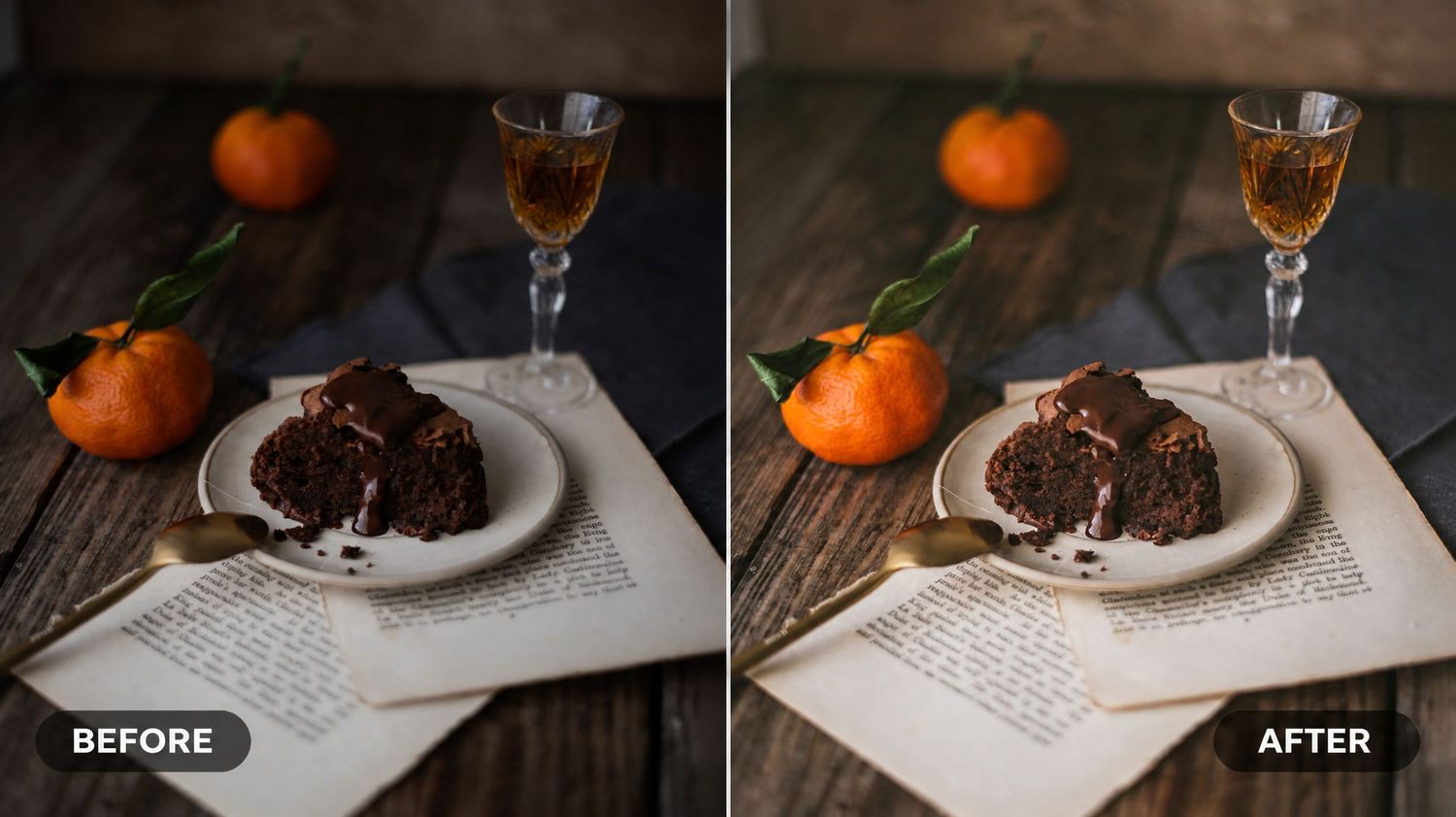
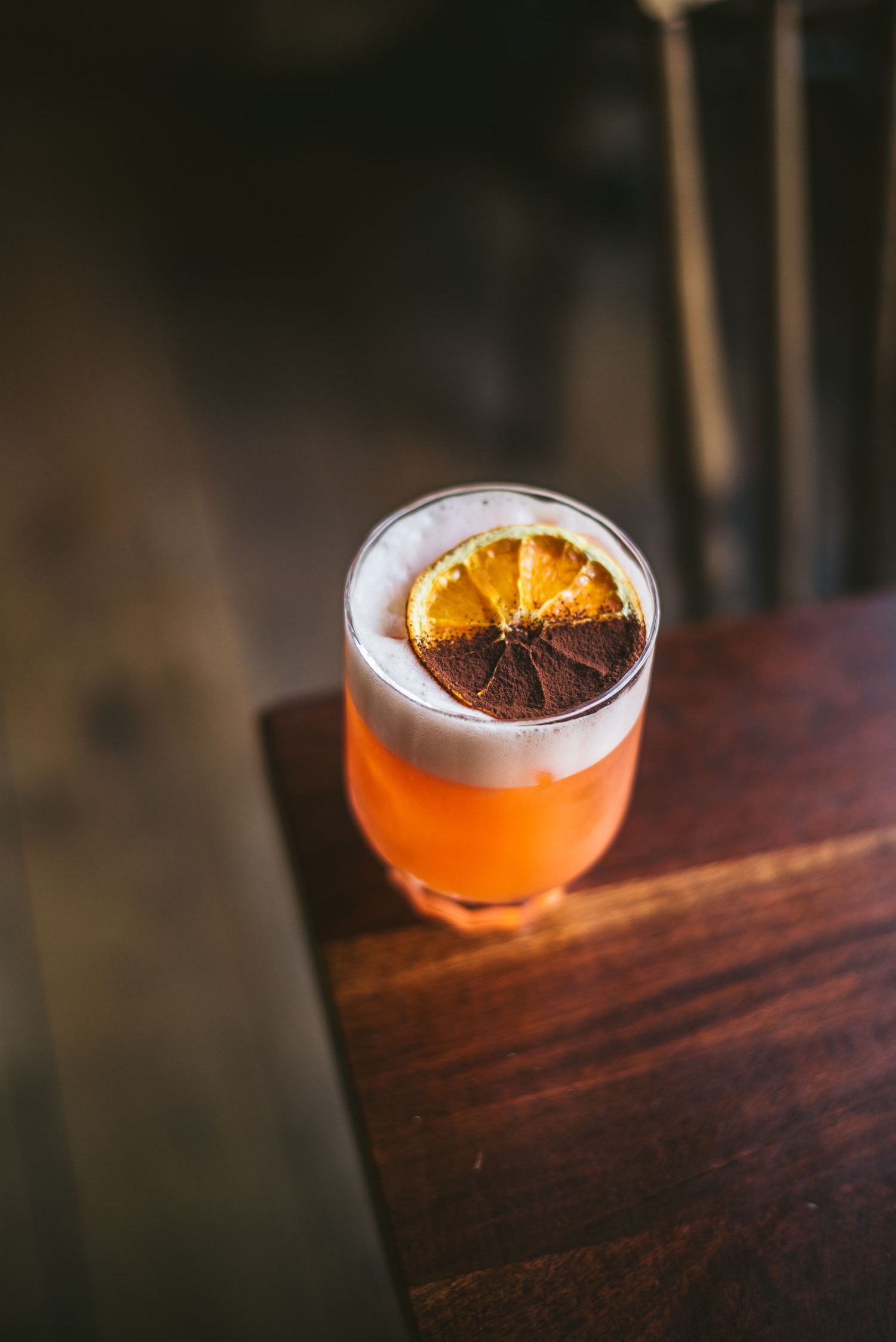
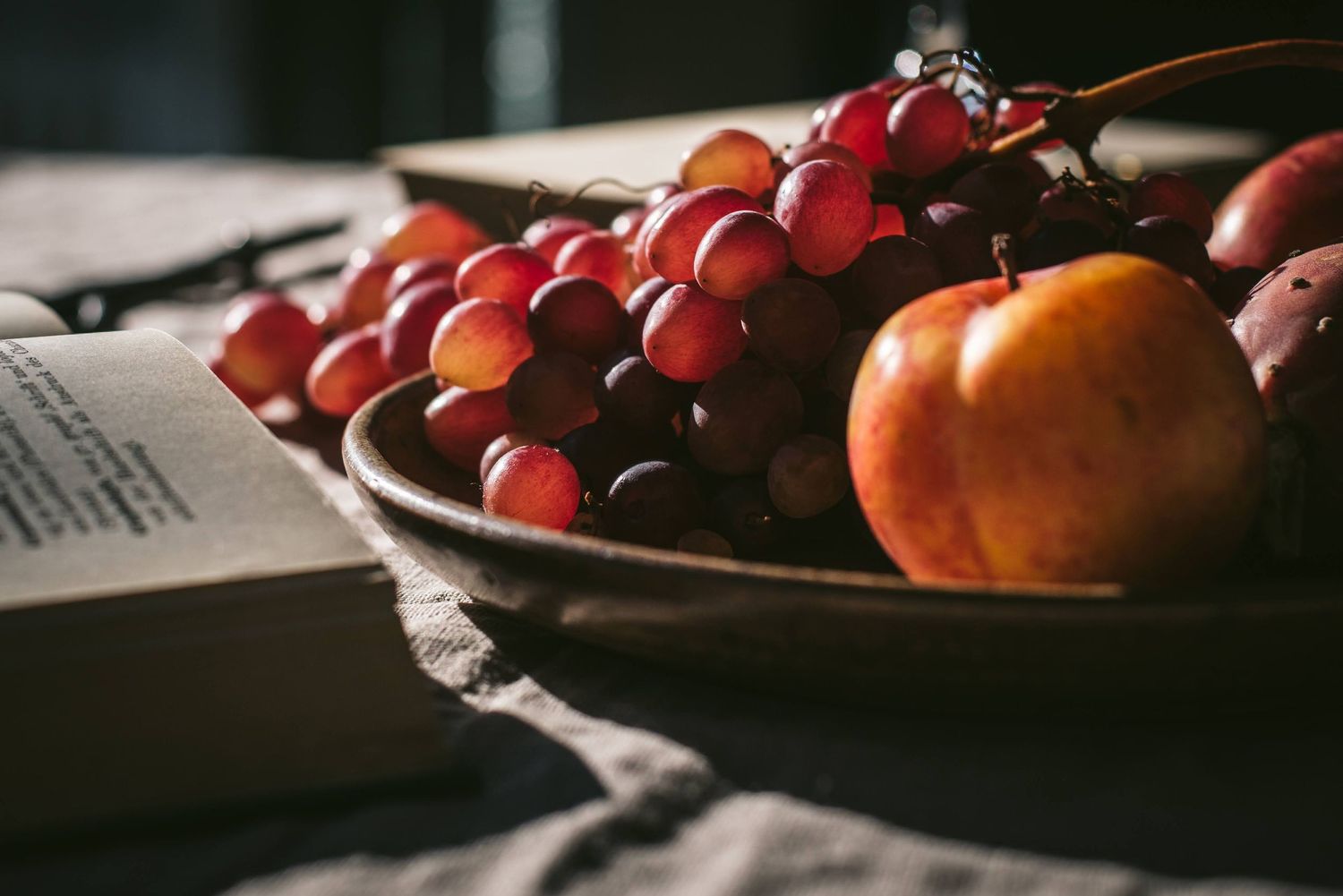
I will keep building a small set on a wooden table by a window. I will keep shooting in the slow, painterly chiaroscuro tradition that began four hundred years before any computer existed. I will keep showing the texture of an actual piece of linen, an actual smear of honey on the edge of an actual plate, an actual hand placing an actual pear in a slanting beam of afternoon sun.
I am not racing against the machine. I am tending the thing the machine cannot make.
For working food photographers reading this, if you are quietly worried, I want to say two small things.
One: your value is not the camera, or the editing, or the styling. Your value is the witness you provide. The fact that you stood in a kitchen, on a specific day, and looked at a specific dish, and saw something true about it. No tool can replace that.
Two: the next two years will be loud. There will be a lot of AI imagery, and some of it will be good. Do not let the noise shake you. Tend your craft. Stay close to the food, the light, the surface, the hands. The brands that matter will come back.
A closing thought
If you are a food photographer: stand on the photographer side of that line. Then keep tending the light.
If you are a brand owner, reading this and wondering whether to spend the money: I cannot tell you what to do. But I can tell you what happened the day I scrolled out of someone's page wanting to love their brand, and never went back. Your audience will scroll out of yours too, on a Tuesday afternoon, before you ever know they were there.
The photograph that is real is the one that earns the second look.
— Fedi
Get the free preset
If a small, painterly note like this every two weeks would be welcome in your inbox, my newsletter is on the link below. It comes with one of my Chiaro Scuro Collection presets as a free gift, so you can carry this aesthetic into your own Lightroom edits before you have even finished reading the second email.
[ → Subscribe and get the free preset ← ]
No spam. No urgency. One unsubscribe click and you are out — though I would rather you stay.